Bowie, Maryland
Deck Staining in Bowie, MD
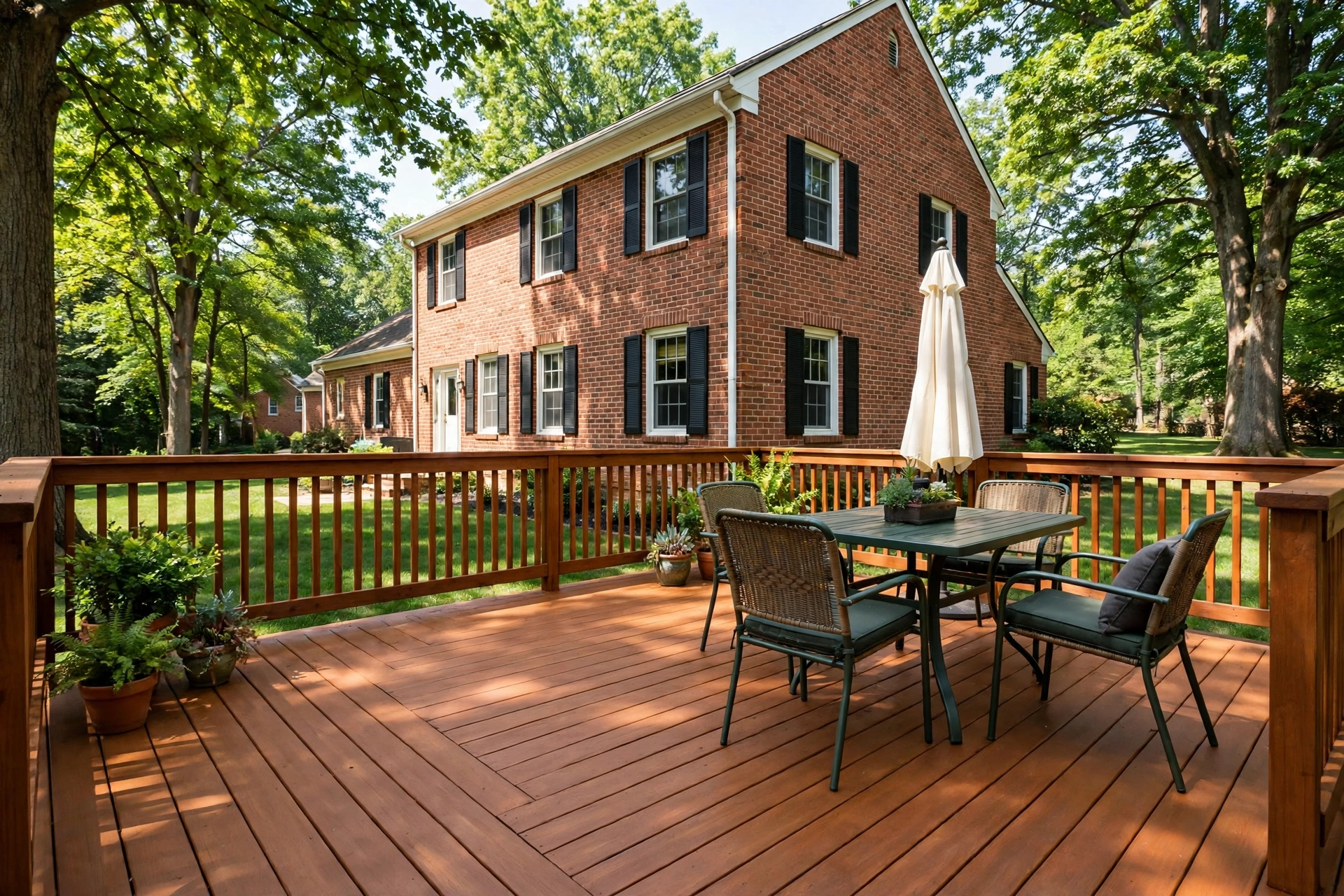
Deck Staining in Bowie, Maryland, with published price ranges up front, the surfaces measured and the prep scope settled on site, and one written figure before any work begins.
Bowie, Maryland
Deck Staining in Bowie, Maryland, with published price ranges up front, the surfaces measured and the prep scope settled on site, and one written figure before any work begins.
A deck behind a Bowie home takes weather from every direction. Summer humidity settles into the boards each night. Afternoon sun bakes the open sections, while boards under the tree canopy stay damp long enough for mildew to take hold. That split life is why stain fails in patches here, peeling on sunny boards and fading to grey in the shade.
We stain decks across Bowie as a full surface job. Boards, railings, steps, and fascia all get read first, because each part weathers at its own pace.
Pollen coats horizontal boards each spring and grinds underfoot. Leaf litter left through fall holds moisture against the wood. On older Bowie lots, heavy shade slows drying after every storm.
Foot traffic writes its own map. The path from the back door to the steps loses finish first. Catching renewal at that stage, while the wood underneath is still firm, keeps the work simple. Waiting until boards cup and splinter turns staining into a repair conversation first.
Clear and lightly toned stains show the grain and suit newer boards, but they give up color fastest under strong sun. Semi transparent stain adds pigment that shields wood longer while grain still reads through. Solid stain covers like paint and hides uneven weathering between old and new boards.
Dark tones heat up under bare feet in July. Light tones show mildew spotting sooner in shade. During the quote visit we talk through how your deck is used and which boards stay wet, then match the stain to those facts instead of a color card alone.
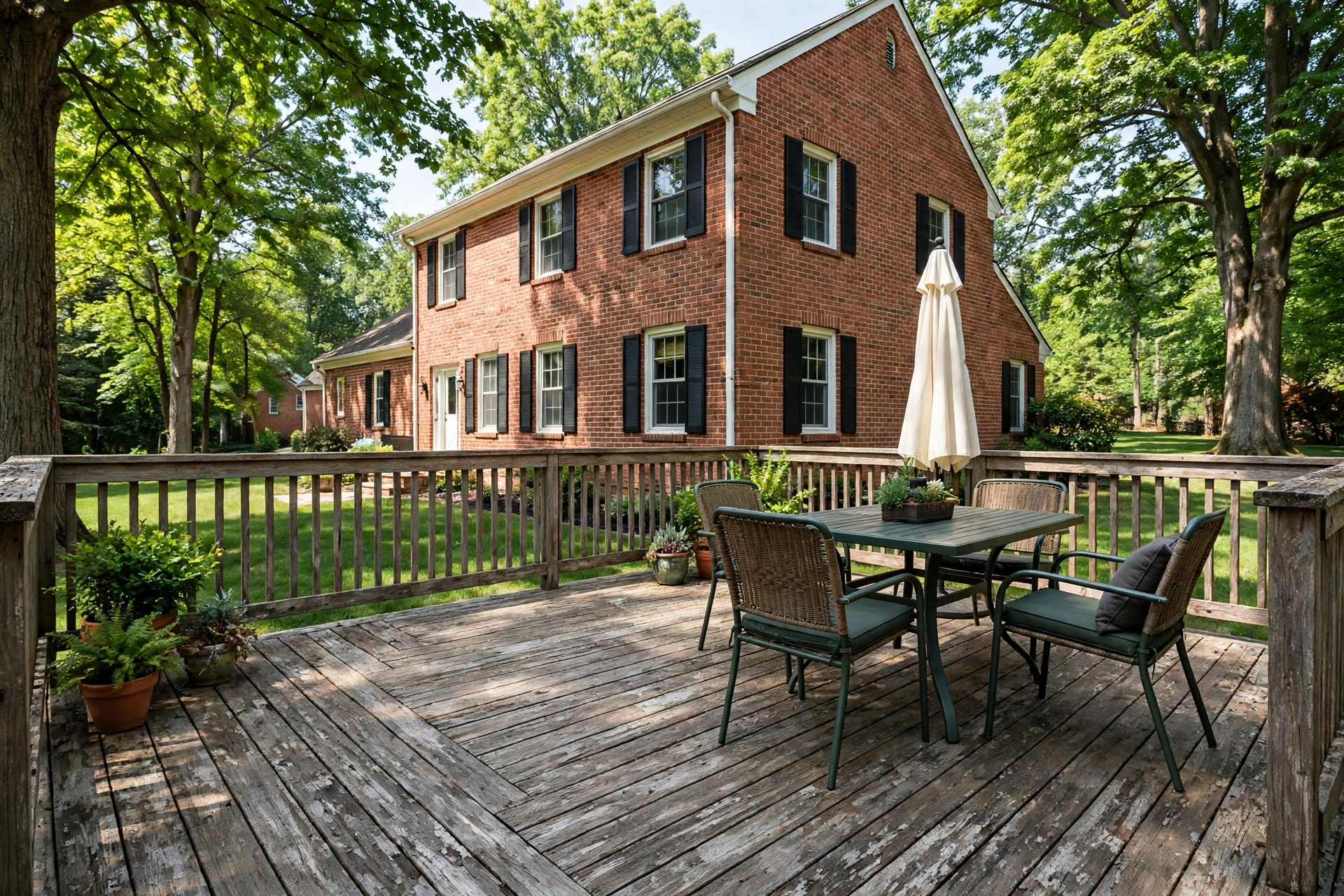
A rear deck in Melford had two zones of wear, with open boards faded grey and a shaded section under mature trees holding mildew and flaking older stain. We washed the full deck, treated the shaded boards, and sanded flaking areas back to sound wood. One soft board at the steps was replaced before a semi transparent stain went on in two coats.
No Bowie company publishes a local price list, so the figures here are published figures, labeled as such. Published figures put deck staining at $680 to $1,750 for a residential deck, covering washing, prep, and stain. For wider context, published guides put exterior painting on a roughly 1,700 square foot home at $4,015 to $7,063.
Where a deck lands inside the published range depends on size, the condition of the old finish, and sanding needs. A sound deck taking a fresh coat of a similar stain sits low. Heavy flaking, mildew treatment across shaded sections, and railing detail add prep hours and move the figure up.
Work starts with the wash, because stain laid over pollen, mildew, and ground in dirt seals the dirt in. Loose finish is scraped and sanded to a firm edge, and bare spots are blended so the new coat takes evenly. Soft boards get flagged before any stain opens.
Stain goes on in settled dry weather, with close attention to the forecast, because a surprise shower in the first hours can spot a fresh coat. End grain at board cuts and step edges gets extra material, as those points drink moisture fastest.
Published figures put deck staining at $680 to $1,750 for a residential deck. Size, the state of the old finish, and sanding needs set your place inside that range. The site visit produces your firm figure.
Exposure decides it. Sun facing boards show wear sooner, while shaded boards grow mildew even where color holds. Grey boards, worn traffic paths, and water soaking in instead of beading are the usual signals.
Not with good results. Fresh stain over loose material lifts with the layer beneath it. Peeling sections get scraped and sanded back to wood that holds, then the whole surface is stained evenly.
Light foot traffic returns once the final coat has cured as the product directs, and furniture follows after that window. We state the timing before we leave. Shaded decks dry slower, so they get the longer guidance.
No. Soft boards signal rot inside the wood, and coating them hides damage without stopping it. Those boards get replaced first, then stained to blend with the rest of the deck.
Dry stretches in spring and fall suit the work well. Summer slots work when the forecast gives coats time to cure between humid nights. Scheduling follows the weather pattern rather than the calendar alone.
Tell us what you want painted. We read every request that comes in and respond with the published range for that kind of work and the next step, starting with a visit to measure the surfaces and talk through prep and colors.
Prefer to talk it through first? Send the form and we will call you back at the number you give us.